It’s November, which means moustaches are about to appear everywhere.
Some will be impressive.
Others will look as though they’ve been drawn on with a slightly blunt pencil.
And there’ll be plenty of men who spend the entire month insisting theirs is coming along nicely, despite the evidence suggesting otherwise.
But behind the questionable facial hair is something genuinely important.
Movember is about getting men talking, looking after their health and recognising when somebody might need a little support.
And you don’t need to grow a moustache to be part of it.
What is Movember actually about?
Movember is an international movement raising awareness and funds for men’s health.
Its main areas of focus are:
- Mental health and suicide prevention.
- Prostate cancer.
- Testicular cancer.
The moustache has become its most recognisable symbol, but it’s really just a conversation starter.
Someone notices it.
They make a joke.
You explain why you’re growing it.
And suddenly you’re having a conversation about something that might otherwise never have come up.
That’s the clever thing about Movember.
It takes something slightly ridiculous and uses it to encourage people to talk about subjects that can be anything but funny.
Why can talking about men’s health be difficult?
Not every man struggles to talk about how he’s feeling.
Plenty are open about their health, relationships, worries and emotions.
But others find it much harder.
Perhaps they’ve grown up believing they should deal with problems themselves.
Perhaps they don’t want to worry their family.
Maybe they’re embarrassed.
Or perhaps they’ve simply never found the right moment to tell somebody that things aren’t going particularly well.
And sometimes it’s easier to say you’re tired, stressed or busy than explain what’s really happening.
That’s why an ordinary conversation can matter.
Not necessarily a serious sit-down discussion.
Just somebody taking an interest.
What does men’s mental health have to do with an estate agency?
Quite a lot, actually.
At Location Location East, we spend our working lives meeting people at important moments.
Sometimes those moments are exciting.
A first home.
A growing family.
A new job.
A long-awaited move.
But sometimes they’re much more difficult.
A relationship has ended.
Someone has died.
A family home needs to be sold.
Financial circumstances have changed.
Or somebody is moving away from the place they’ve known for years.
We see the practical side of those situations because property is involved.
But there’s usually a personal story behind the move too.
And while we’re estate agents, not counsellors or healthcare professionals, working with people through significant changes does remind you of something.
You never really know what somebody else is dealing with.
The person who seems perfectly cheerful at work might be struggling at home.
The neighbour who always waves might be feeling increasingly isolated.
And the friend who hasn’t been in touch for a while might appreciate somebody making the effort.
Can moving home affect your mental wellbeing?
Moving can be exciting, but it can also be unsettling.
Even when the move is something you’ve chosen, there’s plenty to deal with.
Packing.
Money.
Paperwork.
Changing routines.
Getting used to somewhere new.
And leaving familiar places behind.
For some people, moving also means losing the everyday contact they previously took for granted.
The neighbour they chatted to over the fence.
The familiar faces in the local shop.
Friends who lived around the corner.
The pub where everybody knew them.
Those small connections can be more important than we realise.
And when somebody moves to a new town or village, rebuilding them can take time.
That’s one reason why welcoming somebody new to your street is worth doing.
You don’t need to become best friends.
Sometimes simply knowing a neighbour’s name makes a new place feel more like home.
Five small things you can do this Movember
You don’t need to organise a major fundraising event or have all the answers.
There are ordinary things we can all do.
1. Check in with somebody you haven’t heard from
Think about the friend who used to message regularly but has gone quiet.
Or the relative you keep meaning to call.
Send a message.
Ask how they’re doing.
Not because you assume something is wrong.
Just because keeping in touch matters.
2. Make time for a proper conversation
We’re all guilty of asking, “How are you?” while already moving on to the next thing.
Sometimes the answer really is “Fine.”
Sometimes it isn’t.
If somebody seems unusually quiet or distracted, you could ask how things are going and give them the opportunity to talk.
You don’t need to interrogate them.
And you certainly don’t need to force a conversation.
Just make it clear you’re interested in the answer.
3. Welcome someone new to the neighbourhood
If somebody has recently moved into your street, introduce yourself.
Tell them where the nearest shop is.
Recommend somewhere for a coffee.
Let them know which day the bins are collected.
It sounds trivial.
But when you’ve just moved somewhere unfamiliar, those little gestures can make a difference.
Across Thetford, Brandon and the villages of the Brecks, community is built through small everyday interactions as much as organised events.
4. Do something together
Not every conversation needs to happen face-to-face across a table.
Sometimes it’s easier to talk while doing something else.
Going for a walk.
Watching football.
Having a coffee.
Working in the garden.
Taking the dog out.
The activity gives you something to do together without making the conversation itself feel like an event.
And even if nobody talks about anything particularly serious, spending time together is worthwhile.
5. Support Movember in whatever way suits you
Growing a moustache is one option.
But you can also take part in physical challenges, organise a fundraising activity, donate or help share information.
You could get colleagues involved.
Arrange something with friends.
Or simply use the month as a reminder to check in with somebody.
Not everybody can donate money or commit to a challenge.
That’s fine.
Awareness and connection matter too.
What if somebody tells you they’re struggling?
You don’t need to have a perfect response.
And you don’t have to solve everything.
Listen.
Take what they’re saying seriously.
Avoid immediately comparing their situation with your own.
Ask what would be helpful.
Sometimes they may want practical assistance.
Sometimes they might need encouragement to speak to their GP or another appropriate professional.
And sometimes they simply want somebody to hear them.
The important thing is not to make promises you can’t keep or assume that one conversation will fix a difficult situation.
Being there for someone doesn’t mean being responsible for solving everything they’re facing.
What if you’re worried about a friend’s mental health?
You might notice changes in somebody’s behaviour.
Perhaps they’re withdrawing from activities they normally enjoy.
They seem unusually low.
They’re drinking more.
They’re struggling with everyday responsibilities.
Or they just don’t seem like themselves.
Those changes don’t necessarily mean somebody has a mental health condition.
But they can be reasons to check in.
If you’re concerned, talk to them privately and without judgement.
Ask how they’re doing.
Listen to what they say.
If appropriate, encourage them to seek professional support.
And if you believe somebody is in immediate danger, seek urgent emergency assistance rather than waiting to see whether things improve.
Movember is about physical health too
Although conversations about mental health are a major part of Movember, the campaign also raises awareness of prostate and testicular cancer.
Understanding your own body and recognising changes matters.
If you notice something unusual or have persistent symptoms that concern you, speak to your GP.
Don’t assume that a symptom is nothing simply because it feels embarrassing to discuss.
Equally, don’t assume that every change means something serious.
Getting appropriate medical advice is better than trying to diagnose yourself through an internet search.
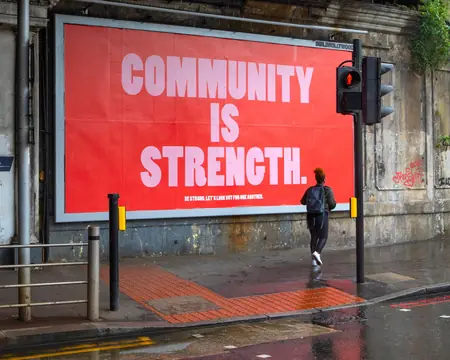
Why community matters
There’s something reassuring about living somewhere people acknowledge one another.
The neighbour who takes a parcel in.
The person who checks whether an older resident is all right after bad weather.
The friend who remembers you’ve had a difficult week.
The familiar face who asks whether you fancy a coffee.
None of those things is extraordinary.
But together, they help make a place feel like a community rather than simply a collection of houses.
And that’s something we value at Location Location East.
We’re based in Thetford and work across the surrounding towns and villages, meeting people at different stages of their lives.
Property may be what brings us into contact.
But people are always the most important part of what we do.
You don’t need a moustache to make a difference
Movember runs throughout November.
But the conversations it encourages shouldn’t stop when December arrives and the moustaches disappear.
You don’t need a special occasion to check in with somebody.
You don’t need to know exactly what to say.
And you don’t need to assume there’s a problem before showing somebody you care.
Sometimes a simple message is enough to begin.
“Haven’t heard from you in a while. Fancy a coffee?”
It might lead to nothing more than a catch-up and a laugh.
And that’s absolutely fine.
But occasionally, it could be the conversation somebody really needed.
Frequently Asked Questions
What is Movember?
Movember is an international men’s health movement that raises awareness and funds for mental health and suicide prevention, prostate cancer and testicular cancer.
When is Movember 2026?
Movember takes place throughout November, from 1 to 30 November 2026.
Do you have to grow a moustache to support Movember?
No. You can support Movember through fundraising, physical challenges, donations, organising activities or helping raise awareness of men’s health.
Why does Movember focus on men’s mental health?
Mental health and suicide prevention are among Movember’s core causes. The campaign encourages conversations, greater awareness and support for men who may be experiencing difficulties.
How can I support a male friend who’s struggling?
Make time to listen without judgement, take their concerns seriously and ask what support they need. Encourage appropriate professional help when necessary. If you believe they’re in immediate danger, seek urgent assistance.
What are the warning signs of poor mental health in men?
There isn’t one universal set of signs. Changes in mood, sleep, behaviour, social contact, alcohol consumption or everyday functioning may indicate somebody needs support. A healthcare professional can help assess concerns.
How can local communities support men’s wellbeing?
Welcoming new neighbours, maintaining friendships, encouraging participation in local activities and making time for ordinary conversations can all help people feel more connected.
Where can I find out more about Movember?
Visit the official Movember website at www.movember.com for information about the campaign, its causes and ways to get involved.
Sources and Further Reading
- Movember – Official UK campaign website, men’s health information and fundraising.
- NHS Every Mind Matters – Mental wellbeing information and practical support.
- NHS: Prostate cancer – Symptoms, diagnosis and treatment.
- NHS: Testicular cancer – Symptoms, diagnosis and treatment.
This article is intended to raise awareness and encourage community connection. It is not a substitute for professional medical or mental health advice.
Article by Andrew Overman | Partner | Location Location East