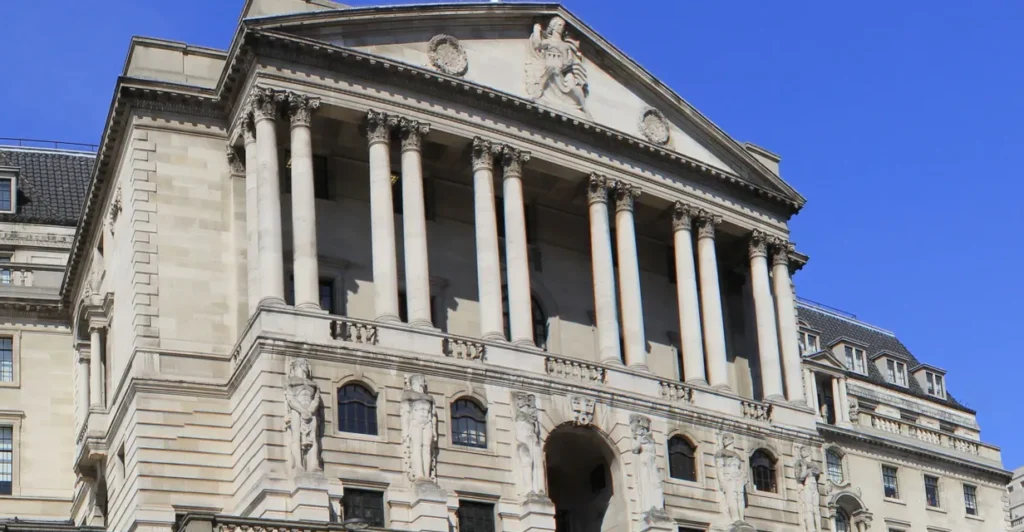
The Bank of England has held Bank Rate at 3.75%.
Again.
For anyone waiting for interest rates to give them a clear green light before buying, selling or remortgaging, another hold might sound like another month where nothing has changed.
But look beneath the headline and there is quite a lot going on.
The Monetary Policy Committee voted 6–3 to keep Bank Rate at 3.75% on 17 September 2026, with the three dissenting members wanting to increase it to 4%.
Inflation has also moved in the wrong direction. The Consumer Prices Index rose by 3.1% in the 12 months to August, up from 2.9% in July. The Bank now says the risks to inflation are tilted further to the upside.
For homeowners and people thinking about moving, the message is therefore slightly more complicated than:
“Rates haven’t changed.”
Your mortgage may not have changed today.
But the mortgage market around it has.
What does the Bank Rate hold actually mean for your mortgage?
That depends on what type of mortgage you have.
If you’re on a fixed-rate mortgage, today’s decision doesn’t change your monthly payment. Your rate remains fixed until your current deal ends.
If you’re on a tracker mortgage linked directly to Bank Rate, there is no Bank Rate change to feed through this month.
If you’re on your lender’s standard variable rate, there is similarly no new Bank Rate reduction or increase forcing an immediate change, although lenders ultimately set their own SVRs.
For most homeowners, therefore, 17 September doesn’t suddenly change the direct debit leaving their account.
The more important question is:
What mortgage rate will be available when you next need one?
Why are mortgage rates changing if Bank Rate hasn’t moved?
This is where the headlines can become confusing.
Bank Rate has remained at 3.75%, but lenders have recently been increasing some fixed mortgage rates.
That’s because fixed-rate mortgages aren’t priced solely according to today’s Bank Rate.
They are influenced by financial markets and expectations about where borrowing costs and interest rates might go next.
Concerns around energy prices and inflation have pushed market expectations around considerably. Major UK lenders have recently increased fixed mortgage pricing as swap rates and wider borrowing costs rose.
That’s why you can simultaneously read:
“Bank of England holds interest rates”
and:
“Mortgage rates rise.”
Both can be true.
Why did the Bank of England keep rates at 3.75%?
Inflation is still above the Bank’s 2% target.
CPI inflation increased from 2.9% in July to 3.1% in August, with transport, particularly motor fuels, making the largest upward contribution to the change.
The Bank has also highlighted higher and more volatile energy prices linked to the continuing conflict in the Middle East.
Its September assessment says inflation is likely to rise further over the coming quarters and that risks to the outlook have moved further to the upside.
But the Bank is also looking at the wider economy, labour market and evidence of whether higher energy costs are feeding through into wages and prices more broadly.
For September, six members of the nine-person Monetary Policy Committee decided 3.75% remained appropriate.
Three wanted 4%.
That split is worth paying attention to.
Are UK interest rates likely to rise next?
Nobody can tell you with certainty.
And that’s perhaps the most important point for anyone making a property decision.
Before September’s decision, financial markets had been pricing in further increases, while a Reuters poll of economists produced a considerably more cautious outlook. The economists surveyed generally expected Bank Rate to remain at 3.75% for longer.
Following today’s decision, market expectations continue to reflect the possibility of higher rates, but those expectations can move quickly as inflation, energy prices and economic data change.
So we wouldn’t advise a buyer or seller to build their entire moving decision around trying to predict exactly what the Bank of England will do next.
There are simply too many moving parts.
What does the interest rate hold mean if you’re buying a house?
If you’re considering buying, use this period to establish what you can comfortably afford now.
Not what you might be able to afford if mortgage rates fall next spring.
And not what you could have borrowed when rates were lower.
What works today?
Speak to a mortgage adviser or lender and establish the monthly payment at the rates currently available to you.
If you already have a Decision in Principle, consider whether it still reflects current mortgage pricing and your circumstances.
And when you find a property, ask your broker whether your chosen lender allows you to secure a rate and move to a cheaper product if one becomes available before completion.
The exact options vary between lenders and products, so take advice rather than assuming.
Should buyers wait for mortgage rates to fall?
That’s a much harder question than it sounds.
Suppose you find the right home at the right price today.
Waiting six months might produce a cheaper mortgage.
It might not.
Rates could rise.
The property might sell to somebody else.
House prices could move.
Your circumstances might change.
Another suitable home might appear.
The point isn’t that you should buy now.
It’s that waiting is also a financial decision, and it has variables of its own.
At Location Location East, we’d rather help a buyer understand the property market as it exists today than encourage them to make a decision based on somebody’s prediction of where interest rates might be next year.
What does the Bank Rate hold mean if you’re selling?
For sellers, today’s announcement doesn’t suddenly transform the market.
Buyers don’t wake up £20,000 richer because Bank Rate was held.
What matters more is affordability.
The people viewing your home are making decisions based on current mortgage costs, deposit requirements, household budgets and the other properties available to them.
That makes pricing and presentation particularly important.
If you’re putting a property onto the market, ask your estate agent to show you the evidence behind the recommended asking price.
What has actually sold?
What’s currently under offer?
What’s competing with you today?
How long are comparable properties taking to find buyers?
And what is happening to asking prices when properties don’t generate enough interest?
Whether you’re selling a family home in Thetford, a village property in the Brecks or somewhere further across our Norfolk and Suffolk market, the principle is the same:
price for the market you’re entering, not the market you hope might arrive in six months.
What if your fixed mortgage is ending soon?
This is where today’s news matters more directly.
The Bank of England’s July Financial Stability Report estimated that the typical owner-occupier coming off a fixed rate over the following two years could see monthly mortgage repayments rise by around £45.
But averages hide some much bigger changes.
Nearly 750,000 households paying interest rates below 3% were expected to come off those fixes during 2026, with an average projected increase of approximately £170 per month.
If your fixed rate ends soon, don’t wait until the final week to investigate your options.
Find out:
When does your existing deal end?
Is there an early repayment charge?
How early can you secure your next mortgage?
What would your payment be at today’s rates?
Could changing term or product alter the numbers?
Those are questions for your lender or a qualified mortgage adviser.
If the resulting payment changes your plans about staying or moving, that’s where a conversation with us about the property itself becomes useful.
What does the rate hold mean for people considering moving home?
One of the easiest traps to fall into is waiting for the market to become “perfect”.
Cheaper mortgages.
Higher sale price.
More choice.
Less competition.
Lower Stamp Duty.
A buyer immediately available for your house.
Unfortunately, property markets rarely arrange all of those things at the same time.
If you’re thinking about moving, start with the reason behind it.
Perhaps you’ve outgrown your home.
Maybe you’re downsizing.
You want to move closer to family.
The commute no longer works.
You’re relocating.
Or the house simply isn’t right for the next stage of your life.
Interest rates should form part of the financial calculation.
They don’t necessarily have to make the entire decision for you.
What does 3.75% Bank Rate mean for landlords?
For landlords with borrowing, the immediate impact again depends on the mortgage product.
A fixed buy-to-let mortgage doesn’t change because of today’s decision. A tracker may respond directly to Bank Rate movements, while refinancing costs will depend on the products available when the existing deal ends.
If you have a buy-to-let mortgage approaching expiry, start looking at the numbers early.
And don’t assess an investment purely by comparing mortgage payments.
Consider rental income, finance costs, maintenance, insurance, taxation, compliance expenditure, void periods and the long-term reason for retaining the property.
For anyone considering a new investment, buy-to-let affordability can also involve rental coverage tests, so speak to an appropriately qualified mortgage adviser about your particular circumstances.
Location Location East doesn’t currently provide lettings or property-management services, but we do regularly speak with landlords considering whether to retain, sell or restructure property investments, particularly as the regulatory and financial landscape changes.
Can landlords simply increase the rent if mortgage costs rise?
No.
A landlord’s mortgage cost doesn’t determine the market rent and doesn’t override the legal process for increasing it.
Since 1 May 2026, landlords of assured periodic tenancies in England can normally increase the rent only once a year, cannot increase it during the first year of the tenancy and must provide at least two months’ notice using Form 4A under the section 13 process.
Tenants can challenge an increase they believe exceeds the open-market rent through the First-tier Tribunal.
So rising finance costs don’t simply translate into an automatic rent increase.
What does the Bank Rate decision mean for the local property market?
Probably less overnight than the headlines suggest.
Interest rates matter enormously to housing, but buyers and sellers don’t make decisions on Bank Rate alone.
Locally, we’re watching the things that tell us what people are actually doing:
enquiry levels, viewing activity, offers, agreed sales, price changes, fall-throughs and the relationship between asking prices and the prices buyers are prepared to pay.
Those indicators help us understand how affordability is translating into behaviour on the ground.
That’s more useful to someone thinking of selling their home than simply knowing that Bank Rate is 3.75%.
When is the next Bank of England interest rate decision?
The next scheduled Monetary Policy Committee announcement is Thursday 5 November 2026.
That decision will be published alongside the Bank’s next Monetary Policy Report.
There will inevitably be plenty of predictions between now and then.
Some will prove right.
Others won’t.
If you’re considering moving, the more useful question is often not:
“What will Bank Rate be in November?”
but:
“Do the numbers work for us now?”
That’s something you can actually establish.
Thinking about moving but unsure what the market means for you?
This is where Location Location East can help.
We advise homeowners and buyers across our core market around Thetford and the Brecks, as well as communities throughout the wider Norfolk and Suffolk area.
If you’re considering selling, we can look at what your property is realistically worth in today’s market, what buyers are doing locally and how we’d position your home to give it the strongest chance of achieving the right result.
And if our view is that waiting makes more sense for your circumstances, we’ll tell you that too.
Good estate agency advice shouldn’t depend on predicting the next Bank of England meeting.
It should help you make the best decision with the information available today.
Frequently Asked Questions
What is the Bank of England interest rate now?
Bank Rate is 3.75% as of 17 September 2026. The Monetary Policy Committee voted 6–3 to leave it unchanged, with three members preferring an increase to 4%.
Has the Bank of England increased interest rates in September 2026?
No. Bank Rate was held at 3.75% on 17 September 2026.
Why are mortgage rates rising when Bank Rate hasn’t changed?
Fixed mortgage pricing is influenced by financial-market expectations and swap rates rather than simply following today’s Bank Rate. Expectations about future inflation and interest rates can therefore push new fixed mortgage rates higher even while Bank Rate itself remains unchanged.
Will my mortgage payment increase because Bank Rate was held?
If you’re on a fixed-rate mortgage, your contractual payment won’t change because of this decision. A Bank Rate tracker also has no new Bank Rate movement to follow. Standard variable rates are set by individual lenders, so check your own mortgage terms.
Should I wait for interest rates to fall before buying a house?
There’s no guaranteed timetable for lower rates. Consider whether the property and monthly payments work for you at today’s costs rather than relying on a future rate prediction. A qualified mortgage adviser can help you understand the borrowing side of that decision.
Is now a good time to sell a house?
Whether it makes sense to sell depends on your circumstances and local market rather than one Bank Rate announcement. Look at recent comparable sales, buyer demand, competing properties and what you hope to achieve from the move. A local property appraisal can help establish those numbers before you decide.
Will the Bank Rate hold affect house prices in Thetford?
A single Bank Rate hold doesn’t determine local house prices. Mortgage affordability is one influence, alongside the number of homes for sale, buyer demand, property type, condition, location and sellers’ pricing decisions. Location Location East monitors actual local transactions and buyer behaviour to understand how those factors are affecting the market around Thetford and the Brecks.
My fixed mortgage ends in 2026 or 2027. What should I do?
Start reviewing your options before the deal expires. Ask your lender or mortgage adviser how early you can secure another product, what rates are currently available and whether early repayment charges apply. Don’t wait until you’ve automatically moved onto an SVR before investigating your options.
When is the next Bank of England interest rate decision?
The next scheduled decision is 5 November 2026, when the Bank will also publish its Monetary Policy Report.
Can Location Location East advise me on my mortgage?
We can discuss how mortgage conditions are affecting the property market and what they could mean for your plans to buy or sell, but we don’t provide regulated mortgage advice. For advice about mortgage products, rates or borrowing, speak to a suitably qualified mortgage adviser or lender.
Sources
Bank of England, Bank Rate maintained at 3.75% – September 2026 Monetary Policy Summary and Minutes, published 17 September 2026.
Office for National Statistics, Consumer price inflation, UK: August 2026, published 16 September 2026.
Bank of England, Financial Stability Report – July 2026, including analysis of mortgage refinancing and projected changes in household mortgage payments.
Reuters, reporting on UK interest-rate expectations and the September Bank of England decision, September 2026.
GOV.UK, Assured periodic tenancies: a guide for tenants – Rent increases, reflecting the rules applying from 1 May 2026.
Bank of England, Monetary Policy Committee dates for 2026 and 2027.
This article is for general information only and does not constitute financial, mortgage or legal advice. Mortgage products and borrowing decisions depend on individual circumstances. Always seek advice from an appropriately qualified professional before making financial decisions.
Location Location East is a founding member of the Ethical Agent Network, a national network of independent estate agents independently assessed against standards covering honesty, transparency, service and community care.
For us, that matters particularly when the market feels uncertain. Good advice isn’t about using an interest-rate headline to persuade someone that they must move now. It’s about understanding their circumstances, explaining what we’re seeing in the property market and helping them make an informed decision.
Find out more about the Ethical Agent Network
Article by Andrew Overman | Partner | Location Location East