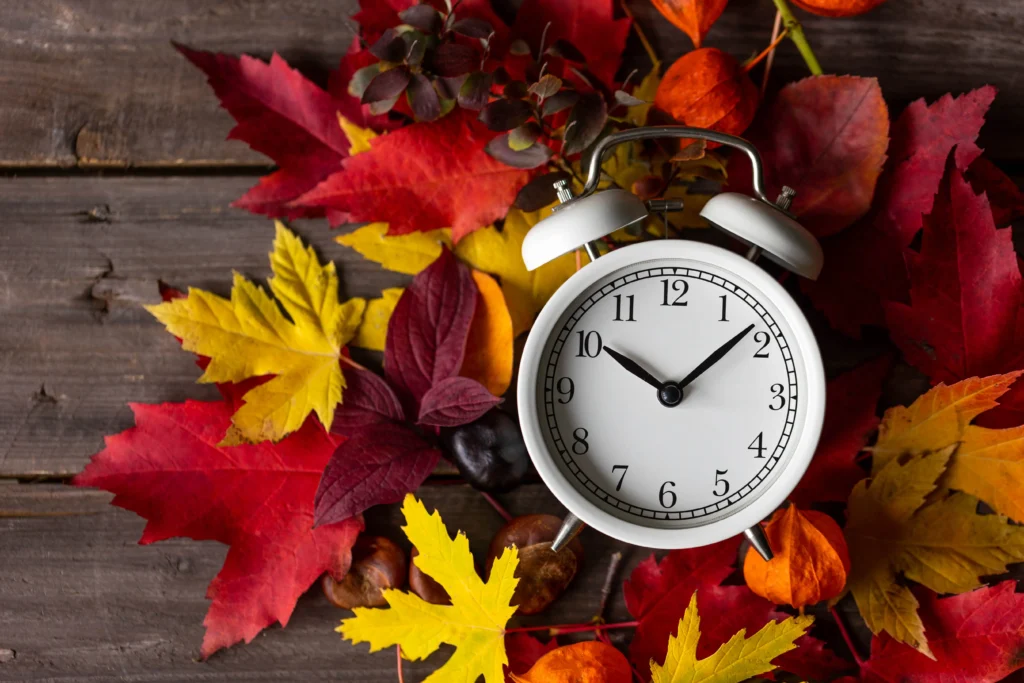
The clocks went back on Sunday.
Halloween is on Saturday.
And suddenly, 5pm feels completely different.
The kitchen that still had daylight pouring through the window a few weeks ago is now under artificial light.
You leave work in darkness.
Curtains are closed earlier.
And home starts to feel different even though nothing about the house itself has actually changed.
So this week we’re leaving mortgages, house prices and moving chains alone.
This one’s simply about making home feel good through the darker months.
Whether you own, rent, live in a town-centre terrace in Thetford, a bungalow on an estate or somewhere out in the Brecks, here are a few inexpensive things worth trying.
Why does your home feel different when the clocks go back?
Mostly because you’re experiencing more of it under artificial light.
Natural daylight affects how we see colour, space and texture.
A room you love during a bright summer afternoon can feel quite different at 6pm on a November evening.
That doesn’t mean you need to redecorate.
Start with the lighting.
How can you make a dark room feel cosier?
Try using more than one source of light.
A single ceiling light has to illuminate an entire room.
Adding a floor lamp or table lamp gives you different pools of light and allows you to change the atmosphere depending on what you’re doing.
That doesn’t mean buying expensive new lighting.
You may already have lamps elsewhere in the house that can be moved around.
Charity shops and second-hand marketplaces can also be useful if you want to experiment without spending much.
Sometimes the smallest changes make a room feel completely different.
What colour light bulb makes a room feel warmer?
Look at the colour temperature, measured in Kelvin (K).
As a general guide, bulbs around 2,700K produce the warmer light commonly associated with living rooms and bedrooms.
Higher colour temperatures appear progressively cooler and whiter.
That doesn’t make one universally better than another.
Cooler light may work perfectly well somewhere you want clear task lighting.
But if the aim is to make a lounge feel comfortable on a dark winter evening, a warmer colour temperature is often the more natural choice.
Check the packaging when you’re buying bulbs rather than relying only on terms such as “warm” or “cool”.
Can mirrors make a dark room brighter?
They can help redistribute light.
A mirror positioned where it reflects a window during the day or a lamp during the evening can bounce light back into the room.
It isn’t going to magically create twice as much daylight.
But positioning reflective surfaces thoughtfully can make darker corners feel less enclosed.
And unlike redecorating, moving a mirror takes about two minutes.
How can you make the most of winter daylight?
Use what you’ve got.
During daylight hours:
open curtains and blinds fully.
Keep windows reasonably clean.
Move anything unnecessarily blocking the window.
Think about whether large furniture is restricting light.
Then, as darkness arrives, change the room over for the evening.
Close curtains or blinds and switch from natural to artificial lighting.
It’s a small daily transition, but it can make winter evenings feel much more intentional.
Do curtains help keep a room warm?
Curtains can help reduce heat loss around some windows, particularly where windows are draughty or less thermally efficient.
But don’t block radiators with heavy curtains.
And during sunny winter days, opening curtains can allow useful solar warmth into the room before you close them again later.
If your home is consistently difficult or expensive to heat, curtains alone aren’t going to solve the underlying issue.
Look for draughts, check your heating is operating properly and consider whether the property needs more substantial energy-efficiency improvements.
Should you change your heating routine in winter?
The most appropriate way to heat a home depends on the heating system, insulation, occupancy and individual circumstances.
Rather than relying on a universal internet rule about when the heating should come on, start by understanding your own system.
Check that:
the controls are set correctly.
radiators are heating properly.
rooms aren’t being unnecessarily overheated.
furniture isn’t blocking heat sources.
obvious draughts are dealt with where appropriate.
And if the heating system isn’t working correctly, get the problem investigated rather than compensating by continually increasing the thermostat.
What should renters do if the heating stops working?
Report it promptly to your landlord or letting agent.
In England, landlords have repairing responsibilities that include installations for heating and hot water.
Put the problem in writing and keep a record of when you reported it.
Location Location East doesn’t provide lettings or property-management services, so we don’t manage repairs or tenancies. Renters should contact their landlord or the agent responsible for managing their home.
How can you make your entrance feel better on a dark evening?
Don’t forget the bit you see before you even get inside.
A working porch or outside light makes arriving home easier.
Once inside, a hall lamp can create a softer welcome than immediately walking into a dark hallway and switching on the brightest ceiling light.
It doesn’t have to be elaborate.
Coming home should feel like coming home.
What should you check outside before winter?
Use a dry daylight hour to walk around the outside of your home.
Look at:
- paths and steps
- wet leaves
- outside lighting
- gates and latches
- gutters and downpipes
- loose or damaged fencing
- outside taps and exposed pipework
- overgrown planting around paths or lighting
Wet leaves can become slippery, particularly on steps and hard surfaces.
If you’re renting, don’t undertake work that isn’t your responsibility or make alterations without permission. Report maintenance issues to your landlord or managing agent where appropriate.
How can you make your home look occupied when you’re out?
Darker evenings make it easier to see when a house appears unoccupied.
Police home-security guidance recommends using lights and timer switches so a home can appear occupied when you’re away.
That doesn’t require turning every light on.
A lamp or two coming on at sensible times can be enough to avoid the whole property sitting visibly dark from late afternoon.
Also remember the basics.
Lock doors and accessible windows.
Keep keys away from letterboxes and cat flaps.
Secure side gates.
Don’t leave tools or ladders accessible outside.
And avoid leaving valuables clearly visible through windows.
Are smart plugs useful for home security?
They can be.
A basic plug-in timer can switch a lamp on and off at predetermined times.
A smart plug gives you more control, often allowing schedules to be changed through an app.
Neither turns your home into Fort Knox.
They’re simply useful ways to automate lighting.
The basics still matter more: secure doors, windows, gates and sensible habits.
What does a porch light mean on Halloween?
There isn’t a legal code, obviously.
But there’s a widely understood bit of Halloween etiquette.
Porch light on: trick-or-treaters are welcome.
Porch light off: probably give this one a miss.
It’s a simple way of making Halloween easier for everyone, particularly households with young children, pets or people who simply don’t want callers.
And if you are welcoming trick-or-treaters, there’s another job worth doing before darkness falls.
Walk the route to your front door.
How do you make your doorstep safer for trick-or-treaters?
Think small people, excited, wearing costumes and concentrating almost entirely on sweets.
Clear anything they’re likely to trip over.
Sweep wet leaves from paths and steps.
Move hoses, toys and other obstacles.
Make sure the route is adequately lit.
Secure anything unstable.
And think carefully about naked flames.
Battery-operated LED candles can give pumpkins the same Halloween glow without an exposed flame near costumes, children or pets.
What about pets on Halloween night?
Halloween can mean repeated knocks, doorbells, unfamiliar voices and people appearing at the door in costumes.
If your dog or cat finds that stressful, consider keeping them somewhere quieter and secure before trick-or-treating begins.
Be particularly careful when repeatedly opening the front door.
A frightened pet disappearing through an open doorway is nobody’s idea of a good Halloween.
How can you make a home feel cosier without spending much?
Before buying anything, try:
moving your existing lamps.
changing where a mirror sits.
opening curtains fully during daylight.
clearing clutter from darker corners.
adding a blanket you’ve already got.
moving furniture away from radiators.
checking obvious draughts.
putting a lamp on a timer.
clearing and lighting the entrance.
None of these will transform the energy performance of your home.
That’s not really the point.
They’re simply small changes that can make everyday winter living feel a little better.
Home is about more than property
We spend plenty of time at Location Location East talking about buying and selling homes.
Values.
Marketing.
Viewings.
Negotiations.
Chains.
Completion dates.
All important.
But a home isn’t really any of those things once you’ve shut the front door.
It’s where somebody makes dinner.
Where the dog takes your place on the sofa.
Where children dump school bags in precisely the place you’ve asked them not to.
Where friends come round.
Where you stick a pumpkin outside because it’s Halloween.
And where, for the next few months, quite a lot of life will happen after dark.
So wherever home is for you across Thetford, the Brecks and our part of Norfolk and Suffolk, switch a lamp on, shut the curtains and make yourself comfortable.
Winter’s here.
You might as well make it cosy.
Frequently Asked Questions
When did the clocks go back in 2026?
British Summer Time ended at 2am on Sunday 25 October 2026, when the clocks went back one hour and the UK returned to Greenwich Mean Time.
What colour temperature is best for cosy lighting?
Many people prefer warmer-white lighting around 2,700K in living rooms and bedrooms because it creates a softer appearance. The most suitable colour temperature ultimately depends on the room and how you use it.
How can I make a dark room feel brighter without redecorating?
Try combining several light sources, opening curtains fully during daylight, repositioning mirrors to reflect available light and ensuring furniture isn’t unnecessarily blocking windows.
Do curtains keep heat in during winter?
Curtains can help reduce heat loss around some windows, but their effectiveness depends on the window, curtain and installation. Avoid covering radiators with curtains because this can restrict heat entering the room.
Should I leave lights on when I’m out?
Police home-security guidance recommends using timer switches or similar lighting measures to help make a home appear occupied. There’s no need to leave every light on continuously.
What should I do if my rented home has no heating or hot water?
Report the problem promptly to your landlord or managing agent, preferably in writing. Landlords in England have legal repairing responsibilities relating to heating and hot-water installations.
Does Location Location East manage rental properties?
No. Location Location East’s Thetford office doesn’t provide lettings or property-management services. Rental information we publish is educational. Renters and landlords should contact the professional responsible for their tenancy or property where specific advice or action is required.
Is it safer to use battery candles in Halloween pumpkins?
Battery-operated LED candles avoid the exposed flame associated with traditional candles and can be a sensible choice around costumes, children and pets.
What does it mean if someone turns their porch light off on Halloween?
It’s commonly treated as a sign that the household isn’t participating in trick-or-treating. Respecting that makes the evening more enjoyable for participating households and those choosing not to take part.
Sources
GOV.UK, When do the clocks change?
Police.uk, home-security guidance.
GOV.UK, Private renting: Repairs.
London Fire Brigade, Halloween and candle fire-safety guidance.
Article by Andrew Overman | Partner | Location Location East