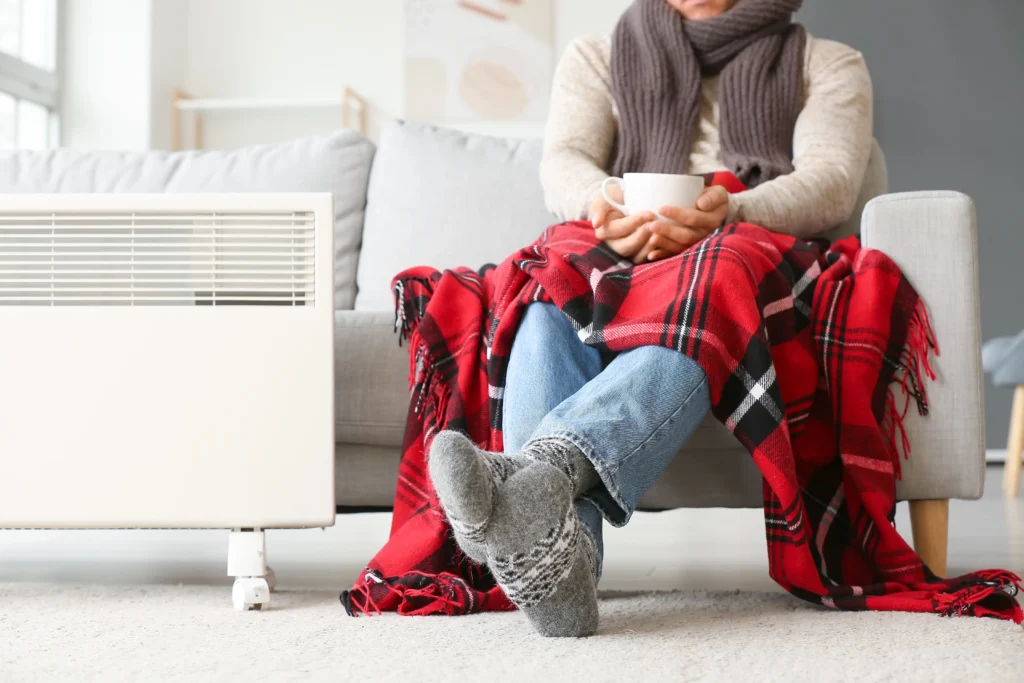
The heating’s been on for an hour.
The thermostat says the room should be warm.
And yet you’re still sitting there wondering whether putting another jumper on might be cheaper than turning it up.
Sound familiar?
As the colder months arrive, many households find themselves trying to balance two things.
Keeping the house comfortable.
And keeping the energy bills manageable.
There’s plenty of advice out there about insulation, heat pumps, new windows and major home improvements.
Some of it is excellent.
But not everybody has thousands of pounds available to spend on upgrading their property.
And if you’re renting, you might not be able to make those changes anyway.
So let’s concentrate on the smaller things.
Practical, relatively inexpensive ways to make your home feel warmer without automatically reaching for the thermostat.
Why does my house feel cold even when the heating is on?
Sometimes the problem isn’t how much heat your heating system produces.
It’s how quickly that warmth escapes.
A draughty room can feel uncomfortable even when the air temperature is reasonably warm.
That’s because moving air increases heat loss from your body.
You might notice it when you’re sitting near a window, walking past the front door or spending time in a room with cold floors.
Older homes can be particularly prone to this.
Properties across Thetford, the Brecks and surrounding Norfolk and Suffolk villages include everything from traditional cottages and Victorian terraces to post-war houses and more modern developments.
Different construction methods bring different heating challenges.
Some properties have solid walls.
Others have suspended timber floors.
Some have older windows, unused fireplaces or poorly sealed external doors.
And even relatively modern homes can develop draughts around fittings or openings.
The first step is to work out where the problem actually is.
How can I find draughts in my home?
Choose a cold or windy day and walk around the house, paying attention to areas where outside air might be entering.
You may notice cooler air around:
- External doors and letterboxes.
- Window frames and opening sections.
- Skirting boards and floorboards.
- Loft hatches.
- Unused fireplaces.
- Gaps around pipework.
- Cat flaps and other external openings.
You don’t need specialist equipment to identify some of these problems.
Sometimes you can feel the movement of air with your hand.
A draught detector or thermal imaging assessment may help with less obvious areas, although professional equipment isn’t necessary for every household.
One important distinction: not every opening should be sealed.
Airbricks, trickle vents and other purpose-provided ventilation can be essential for controlling moisture or ensuring appliances operate safely.
Never block ventilation provided for gas appliances or other combustion equipment.
The aim is to reduce unwanted draughts, not eliminate the fresh air your home needs.
Six affordable ways to make your home warmer this winter
1. Draught-proof external doors
A gap beneath the front door can let cold air into the hallway and make adjoining rooms feel uncomfortable.
A suitable door-bottom brush or draught excluder may help.
Letterbox brushes and appropriate seals around door frames can also reduce unwanted airflow.
These are often relatively inexpensive improvements.
If you’re renting, a removable draught excluder may be the simplest option, while fitted seals or alterations should be discussed with your landlord where necessary.
2. Make better use of curtains and blinds
Curtains can help reduce the uncomfortable feeling of cold surfaces near windows.
Thicker or lined curtains may improve comfort, particularly in rooms with older glazing.
Close them when it gets dark to help retain warmth.
During daylight hours, opening them can allow sunlight into the room.
But pay attention to where they hang.
If long curtains cover a radiator, they can restrict the circulation of warm air into the room.
Where practical, keep radiators unobstructed.
3. Check unused fireplaces and chimneys
An unused open chimney can allow warm air to escape.
Purpose-made chimney draught-reduction products may help in suitable circumstances.
However, fireplaces and flues need particular care.
Never block a chimney serving an appliance that’s in use.
And don’t seal a disused fireplace without checking its ventilation requirements, as inadequate ventilation can contribute to moisture problems.
If you’re unsure, seek advice from a suitably qualified professional.
4. Consider radiator reflector panels
Radiators fitted to external walls can lose some heat towards the wall behind them.
Purpose-made reflector panels may help reduce that heat loss in certain properties, particularly where the wall has limited insulation.
They’re generally inexpensive compared with major building improvements.
However, the benefit varies according to the wall construction, radiator position and existing insulation.
Don’t expect a reflector panel to transform a poorly insulated room on its own.
5. Use heating controls properly
If your heating system has a programmable timer, room thermostat or thermostatic radiator valves, understanding how they work can help avoid unnecessary heating.
For many conventional boiler systems, reducing temperatures in rooms that don’t need as much heat can reduce energy consumption.
But don’t turn rooms down so far that they become excessively cold or develop damp problems.
And remember that different systems work differently.
Heat pumps, for example, may operate more efficiently with steadier settings than traditional on-and-off boiler heating.
The best approach depends on your heating system, insulation and how you use the home.
6. Check whether radiators are heating evenly
If a radiator is warm at the bottom but cold at the top, trapped air may be preventing it from heating properly.
Bleeding the radiator may help.
But follow the manufacturer’s guidance and take care around hot water and pressurised systems.
If you’re renting, check whether this is something your landlord or managing agent wants to arrange.
And if radiators remain cold, repeatedly lose pressure or fail to heat properly, the problem may need professional attention.
Is it cheaper to leave the heating on low all day?
This is one of the most common questions about winter energy bills.
And the answer depends on the type of heating system and the building.
For many homes using a conventional gas boiler, heating only when needed is generally more economical than maintaining the same temperature throughout an otherwise empty house.
That’s because the warmer a building is compared with the outside air, the more heat it tends to lose.
However, the picture can be different for heat pumps, well-insulated homes or properties with particular moisture-control needs.
Some systems work best with a relatively steady temperature.
Rather than relying on a universal rule, check the guidance for your heating system and consider how your home retains heat.
Does turning the thermostat up heat a room faster?
Usually not with a conventional on/off central heating thermostat.
Turning the thermostat to 25°C instead of 20°C generally tells the system to continue heating until it reaches the higher temperature.
It doesn’t necessarily make the room warm up faster.
That can lead to overheating and wasted energy.
A better approach is to set an appropriate temperature and use the heating schedule to make the home comfortable when you need it.
More sophisticated heating systems may operate differently, so it’s worth understanding the controls you actually have.
What about rooms that are always colder than the rest of the house?
Many homes have one room that never seems to get quite as warm as the others.
Sometimes it’s a bedroom above a garage.
Perhaps it’s a room with two external walls.
Or a downstairs room with a suspended timber floor.
These rooms can lose heat more quickly because more of their surfaces are exposed to colder conditions.
Simple changes may improve comfort.
A suitable rug can make a cold floor feel more comfortable.
Curtains may reduce the discomfort caused by cold windows.
Draught-proofing can help where unwanted air is entering.
But if the room remains significantly colder than the rest of the property, it may be worth investigating the insulation, heating provision or building condition.
Sometimes the solution needs to go beyond another blanket.
Are portable electric heaters cheaper than central heating?
Not necessarily.
Portable electric heaters can be useful for warming a particular room for a short period.
But electricity typically costs more per unit than mains gas, so using direct electric heaters to warm an entire home may be more expensive than operating an efficient gas central heating system.
The actual cost depends on the heater’s power, how long it’s used, your energy tariff and the alternative heating available.
A 2kW electric heater running at full power for one hour uses approximately 2kWh of electricity.
You can estimate the cost by multiplying that consumption by your electricity unit rate.
If you’re using portable heaters, follow the manufacturer’s safety guidance, keep them clear of combustible materials and avoid overloading sockets or extension leads.
Can I save energy if I live in a rented property?
Yes.
Many of the smaller changes discussed here can be suitable for rented homes.
Removable draught excluders, sensible use of curtains, rugs and heating controls may improve comfort without making permanent alterations.
However, don’t assume every change is automatically permitted.
Fitted draught-proofing, chimney products or alterations to heating equipment may require the landlord’s agreement.
And there are limits to what tenants should be expected to resolve themselves.
If the heating is broken, windows are defective, or persistent damp and mould are affecting the property, report the issue to your landlord or managing agent in writing.
Landlords have legal responsibilities relating to repairs and housing conditions.
Tenants shouldn’t have to rely on temporary measures to compensate for serious unresolved defects.
Will draught-proofing cause condensation or mould?
It can contribute to problems if a home is sealed without maintaining adequate ventilation.
Everyday activities such as cooking, showering and drying washing release moisture into the air.
Without sufficient ventilation, that moisture can collect on colder surfaces.
Over time, this may contribute to condensation and mould.
That’s why it’s important to distinguish between unwanted draughts and ventilation that’s deliberately provided.
Keep extractor fans and appropriate ventilation openings working.
Use ventilation when cooking and bathing.
And investigate persistent condensation rather than simply wiping it away every morning.
If you’re renting and the problem continues, report it to your landlord.
Should I open my windows during winter?
Homes need adequate ventilation throughout the year.
That doesn’t mean every window needs to stay open all day.
Short periods of ventilation may help remove moisture after activities such as cooking or showering, where safe and appropriate.
Extractor fans can also play an important role.
The best approach depends on the property and its ventilation system.
In some homes, continuously operating mechanical ventilation is designed to manage airflow without relying on frequent window opening.
The important thing is to avoid blocking or disabling the ventilation the property needs.
Is it worth improving insulation in an older home?
Often, yes, but the right approach depends on the building.
Loft insulation, wall insulation, floor insulation and improved glazing can all reduce heat loss in suitable circumstances.
However, older properties sometimes need particular care.
Traditional solid-wall buildings, for example, may manage moisture differently from modern cavity-wall homes.
Inappropriate insulation or sealing can sometimes create damp problems rather than solve them.
Before undertaking major work, consider an appropriate assessment of the property’s construction and existing condition.
And if you’re thinking about selling, it may be worth discussing whether the likely benefit justifies the investment before committing to expensive improvements.
Can energy efficiency affect a property’s value?
Energy efficiency can influence buyer decisions.
Running costs, heating systems, insulation and EPC ratings are all things buyers may consider when comparing homes.
A property with a modern heating system and good insulation may appeal to people concerned about ongoing expenditure.
But that doesn’t mean every energy-efficiency improvement will increase the sale price by the amount spent.
Location, condition, accommodation, comparable sales and market demand remain important.
At Location Location East, we help homeowners understand how their property’s condition and features compare with competing homes in the local sales market.
Sometimes improvements are worthwhile before selling.
Sometimes they’re better left to the next owner.
The answer depends on the property and the cost involved.
Keeping warm doesn’t always mean spending more
When the weather turns colder, it’s tempting to focus entirely on the thermostat.
But comfort is influenced by more than the temperature shown on the wall.
Draughts.
Cold floors.
Curtains.
Insulation.
Heating controls.
Ventilation.
And the condition of the building itself.
Not every home needs a major upgrade to feel more comfortable.
Sometimes a few relatively inexpensive changes can help.
And where a property has more serious problems, identifying the cause is far better than repeatedly paying to heat a room that never stays warm.
Whether you own your home or rent it, the aim is the same.
A warmer, more comfortable home without spending money unnecessarily.
Frequently Asked Questions
What is the cheapest way to keep a house warm in winter?
Start by identifying unwanted draughts, making effective use of curtains, checking heating controls and ensuring radiators aren’t obstructed. The most effective measures depend on the property and heating system.
Why does my house feel cold when the thermostat says 20°C?
Draughts, cold floors, poorly insulated walls and cold window surfaces can make a room feel uncomfortable even when the air temperature is relatively warm.
Is it cheaper to leave the heating on all day?
For many homes with conventional gas boilers, heating when needed is generally more economical. Heat pumps and other systems may benefit from steadier operation, so check the guidance for your particular system.
Does turning the thermostat up heat the house faster?
With a conventional on/off thermostat, turning it up usually increases the target temperature rather than the speed of heating. Other heating systems may behave differently.
Are radiator reflector panels worth buying?
They may reduce heat loss through external walls behind radiators, particularly in less well-insulated properties. Savings vary according to the wall construction and existing insulation.
Can tenants draught-proof their rented home?
Many removable draught-proofing measures may be suitable, but tenants should seek permission before making alterations where required. Purpose-provided ventilation must not be blocked.
Should I block an unused chimney to stop draughts?
Only with a suitable product and after checking that the chimney is genuinely unused and that appropriate ventilation is maintained. Never block a flue serving an operating appliance.
Can draught-proofing cause damp?
Poorly planned draught-proofing can contribute to condensation if necessary ventilation is blocked. Reduce unwanted gaps while keeping appropriate ventilation working.
Are portable electric heaters expensive to run?
Their running cost depends on power consumption, duration and electricity tariff. Direct electric heating can be expensive compared with mains gas heating, particularly when used to heat an entire home.
Should I upgrade my home’s insulation before selling?
It depends on the property, the cost of improvements and local buyer expectations. An estate agent can help you consider how the property compares with alternatives, although technical insulation advice should come from a suitably qualified professional.
Sources and Further Reading
- Energy Saving Trust – Home energy efficiency, heating controls and draught-proofing guidance.
- GOV.UK: Find ways to save energy in your home – Energy-saving improvements and recommendations.
- Ofgem – Energy tariffs, price cap information and consumer guidance.
- NHS: Damp and mould – Health information relating to damp and mould.
Energy savings vary according to the property, heating system, energy tariff and household circumstances. Electrical, heating, chimney and insulation work should be undertaken safely and with appropriate professional advice where necessary.
Article by Andrew Overman | Partner | Location Location East